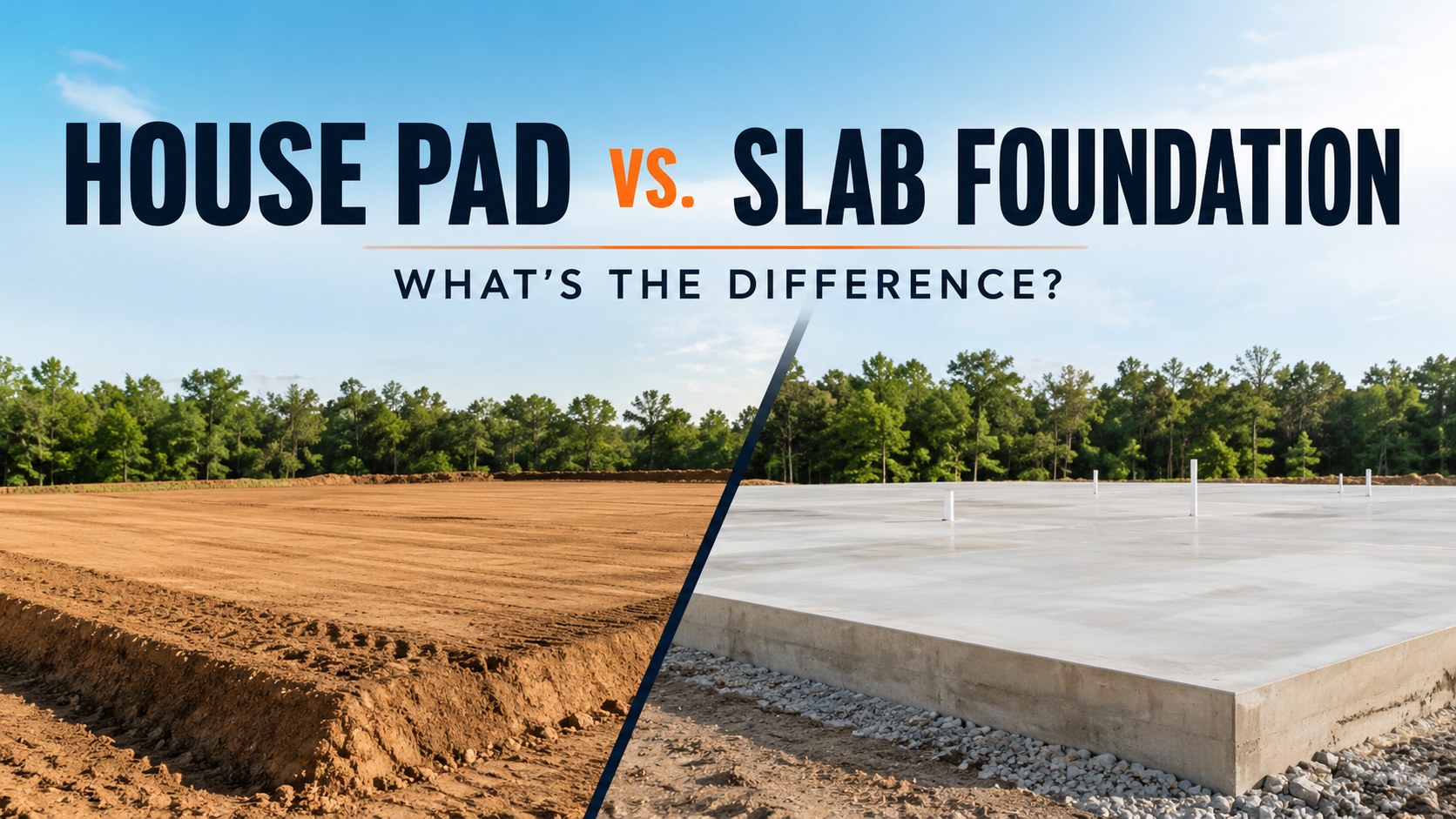
When people begin planning a new home, one of the most common points of confusion is the difference between a house pad and a slab foundation. Many homeowners use the terms interchangeably, but they’re actually two completely different parts of the construction process.
At Optimum Site Prep, one of the first questions we hear from new property owners is, “Do I need a house pad if I’m pouring a concrete slab?” The answer is almost always yes.
Understanding the difference can help you make better decisions, avoid costly mistakes, and ensure your home starts with a solid foundation—literally.
What Is a House Pad?
A house pad is the prepared ground beneath your future home. It’s the carefully engineered area of soil that has been cleared, graded, filled, compacted, and shaped before construction begins.
Think of the house pad as the base that supports everything built above it.
A properly constructed house pad typically includes:
- Land clearing
- Removal of stumps, roots, and debris
- Grading the property
- Adding quality fill dirt if needed
- Proper soil compaction
- Elevation adjustments
- Drainage planning
Only after the house pad is complete can the foundation contractor begin forming and pouring the concrete foundation. Proper grading, compaction, and drainage during pad construction are essential to creating a stable building site.
What Is a Slab Foundation?
A slab foundation is the actual concrete foundation your home sits on.
Once the house pad has been completed and inspected, foundation contractors install forms, reinforcing steel, plumbing, and vapor barriers before pouring concrete.
The slab becomes the permanent structural base of your home.
It supports:
- Exterior walls
- Interior walls
- Flooring
- Roofing
- Furniture
- Appliances
- Everything else inside the home
While the slab is incredibly important, its performance depends heavily on the quality of the house pad underneath it.
The Biggest Difference
The simplest way to understand it is this:
The house pad is the prepared soil.
The slab foundation is the concrete structure built on top of that soil.
One comes before the other.
Without a properly prepared house pad, even the best concrete slab can experience problems years later.
Why the House Pad Is So Important
Many homeowners focus on the concrete because that’s what they can see.
What they don’t see is everything happening underneath.
The ground beneath your home constantly responds to:
- Rainfall
- Moisture changes
- Drought
- Organic material breaking down
- Soil movement
- Weight from the structure
If the soil wasn’t prepared correctly, those changes can cause the slab to move.
That’s why experienced builders understand that the quality of the house pad is just as important as the quality of the concrete.
What Happens If the House Pad Isn’t Built Correctly?
Poor site preparation can lead to expensive repairs years after construction.
Some common issues include:
Foundation Settlement
Loose or improperly compacted soil can compress over time.
When that happens, sections of the slab begin sinking.
Cracked Concrete
As the slab settles unevenly, cracks begin to appear.
While some hairline cracks are normal, larger structural cracks often point to movement underneath.
Uneven Floors
One side of the home may settle more than another.
This creates sloping floors that become noticeable over time.
Doors and Windows That Stick
Foundation movement changes the shape of the home ever so slightly.
Doors stop closing correctly, and windows become difficult to open.
Drainage Problems
If the house pad wasn’t graded properly, rainwater can collect around the foundation instead of draining away.
Standing water increases the likelihood of erosion and moisture-related issues. Proper pad elevation and drainage help protect both the foundation and surrounding property.
What Goes Into Building a House Pad?
Every property is different, but the overall process follows the same general steps.
Land Clearing
Trees, brush, roots, stumps, and debris are removed.
This creates a clean building area.
Topsoil Removal
Organic material isn’t suitable for supporting a structure.
Topsoil is stripped away until stable soil is reached.
Fill Dirt Placement
If additional height is needed, quality structural fill dirt is added.
The type of soil matters.
Using poor-quality fill can create problems later.
Grading
Heavy equipment shapes the pad to the proper elevation.
The surrounding property is also graded to direct water away from the future home.
Soil Compaction
Fill dirt is placed in layers and compacted using specialized equipment.
Proper compaction is one of the most critical steps because it reduces future settling.
Final Preparation
Once the pad reaches the required elevation, slope, and density, it’s ready for foundation work.
Why Elevation Matters
One of the biggest advantages of building a properly engineered house pad is controlling the home’s elevation.
A house that’s built too low may experience:
- Standing water
- Flooding
- Poor drainage
- Foundation erosion
A correctly elevated house pad allows rainwater to move away from the home naturally.
This is especially important in Florida, where heavy rainfall can quickly expose drainage problems.
Does Every Home Need a House Pad?
In almost every new construction project, yes.
Whether you’re building:
- A custom home
- A manufactured home
- A modular home
- A barndominium
- A workshop
- A detached garage
The site needs proper preparation before construction begins.
Skipping this step usually creates much larger expenses later.
Can the Builder Handle the House Pad?
Sometimes.
However, many builders hire specialized site preparation contractors because they have the equipment and experience needed for:
- Clearing land
- Excavation
- Dirt work
- Grading
- Soil compaction
- Drainage improvements
Having a dedicated site preparation company ensures the property is truly ready before foundation work begins.
How Long Does House Pad Construction Take?
The timeline depends on several factors, including:
- Property size
- Existing vegetation
- Soil conditions
- Amount of fill dirt required
- Weather
- Drainage needs
Smaller residential projects may only take a few days.
Larger rural properties requiring extensive clearing and grading naturally take longer.
Which Comes First?
The order of construction is straightforward:
- Survey and planning
- Land clearing
- Excavation
- House pad construction
- Soil compaction
- Utility preparation
- Foundation forms
- Concrete slab installation
- Home construction
Each step builds upon the previous one.
Choosing the Right Site Preparation Contractor
Since everything starts with the ground beneath your home, choosing the right contractor matters.
Look for a company that understands:
- Proper grading
- Drainage design
- Soil compaction
- Equipment operation
- Site planning
- Local building conditions
An experienced site preparation contractor doesn’t simply move dirt—they help create the stable base your home will rely on for decades.
Trust Optimum Site Prep for Quality House Pad Construction
At Optimum Site Prep, we understand that every successful build starts long before concrete is poured. Our team specializes in professional house pad construction, land clearing, grading, dirt work, and site preparation that gives your builder a stable, build-ready foundation to work from.
Whether you’re building a custom home, manufactured home, barndominium, or workshop, we take the time to prepare your property the right way from the ground up. By focusing on proper grading, drainage, and soil compaction, we help reduce the risk of future foundation issues and ensure your project gets off to the best possible start.
If you’re ready to prepare your property for construction, contact Optimum Site Prep today to schedule a consultation and let us help build the foundation for your next project.